
Italy's first Community Land Trust unlocks what the market cannot
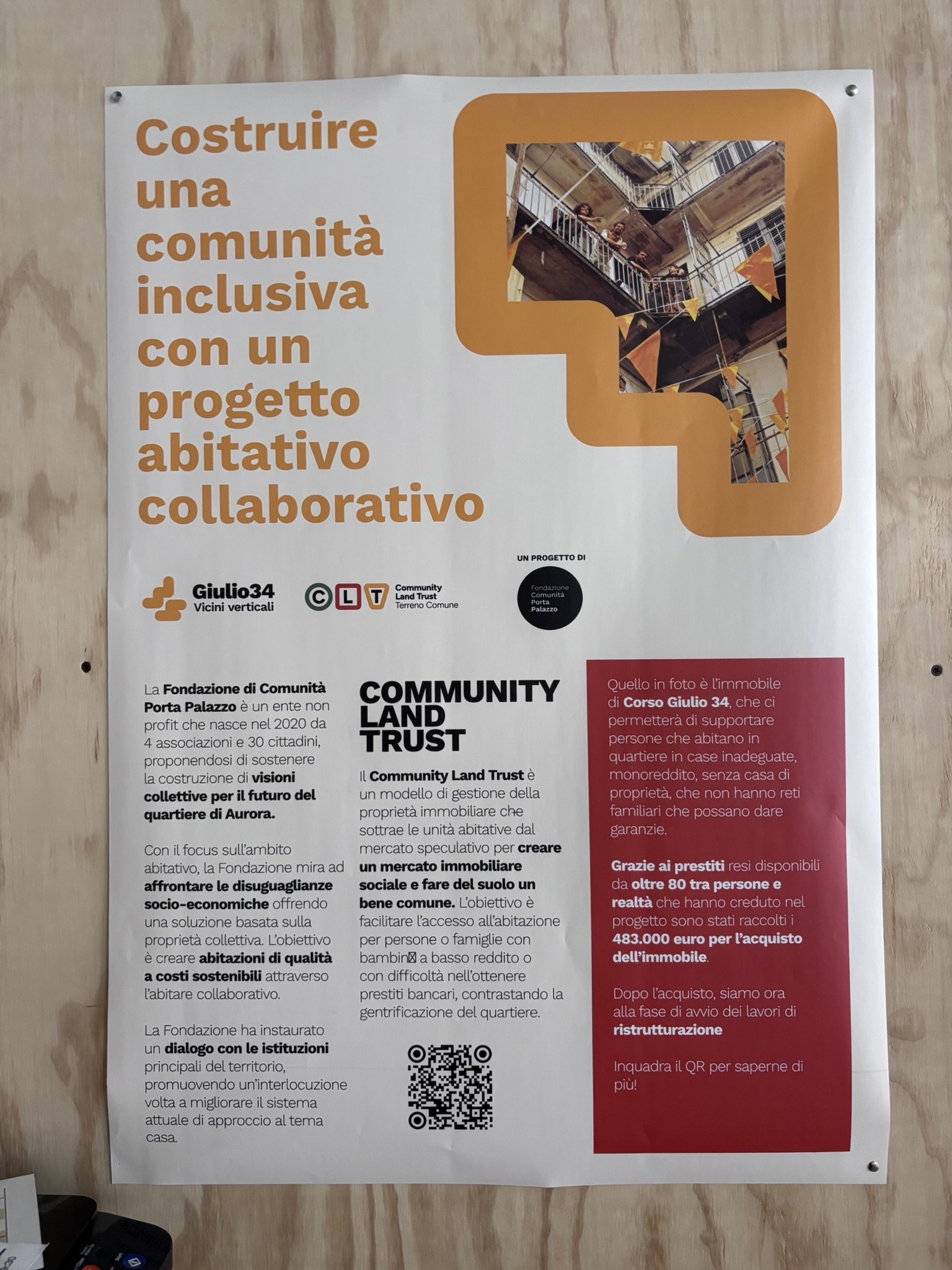
Fondazione CLT - Terreno Comune | Pilot project Giulio34
Corso Giulio Cesare 34, Turin, Italy
Currently under construction, 16 apartments and community space
Turin has thousands of empty homes and thousands of families that cannot find one. Italy's first Community Land Trust is showing how to close that gap. This summer, Giulia Barnhisel and Dali Malnoury from the Network visited the project in Turin's Aurora neighbourhood.
A neighbourhood under pressure
Turin's Aurora neighbourhood, and its sub-area Porta Palazzo, just north of the city centre, is one of the city’s most densely populated and economically fragile areas. The population here is young and growing fast: density is roughly three times the Turin average, while requests for public housing are four times higher than the city's average.
For many families, finding a home means navigating a market stacked against them. Some landlords simply refuse to rent to migrant families or households with children. Others exploit the shortage through caporalato abitativo, charging inflated rents for inadequate homes to tenants who urgently need a lease on paper.
At the same time, the neighbourhood is at risk of gentrification - providing an alternative to this process has been a fundamental motivation to launch the CLT combined with the need to provide affordable housing.
Yet, the homes exist: 69 thousand apartments or 16% of buildings in Torino are vacant, and the market is failing to bring them back into use. CLT Torino is showing how this empty stock can be unlocked and turned into permanent homes for the local community.
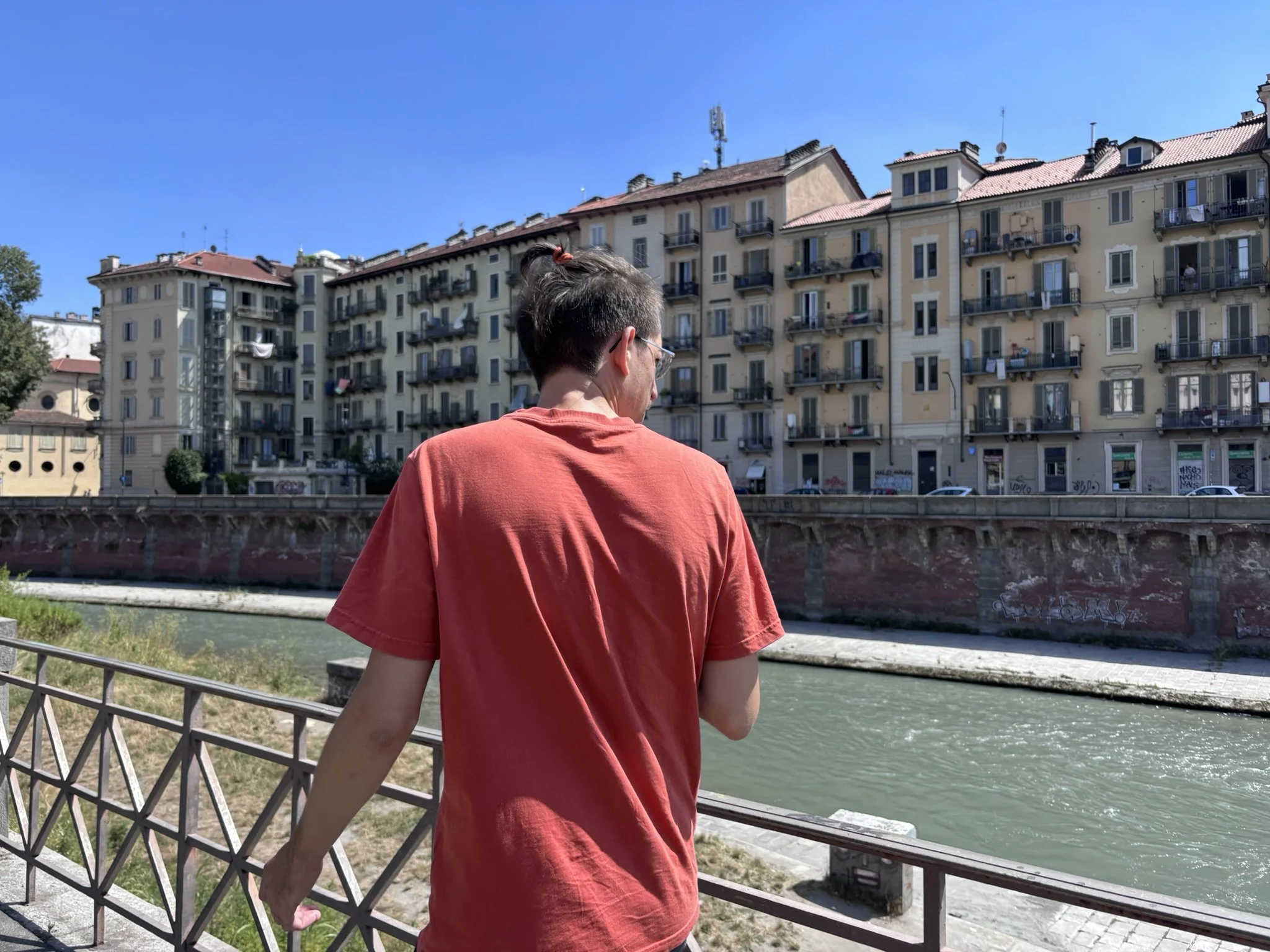
Karl Kraehmer from CLT Terreno Comune showing us around the city of Turin.
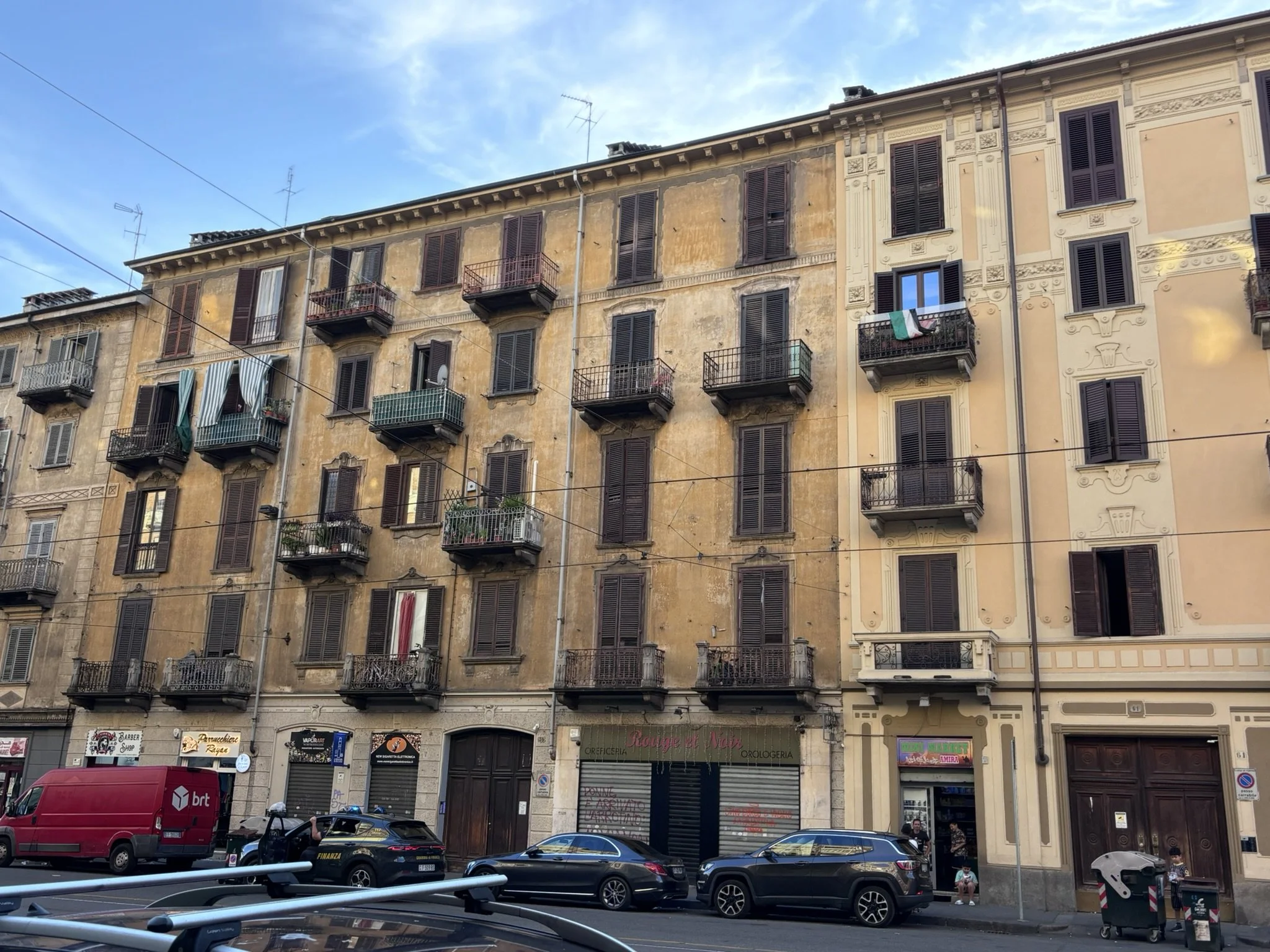
The Porta-Palazzo neighbourhood.
Building for local needs
At Corso Giulio Cesare 34, roughly 1,000 square meters of a building that stood empty for years, is currently being renovated into 16 permanently affordable apartments and community spaces.
What sets this CLT apart is how it was financed. Most European CLTs get started by acquiring public land or securing public subsidies. CLT Torino did neither. An initial grant from the local foundation Fondazione Compagnia di Sanpaolo got the project moving, funding the feasibility study. A crowdlending campaign did the rest: the building was bought with €500,000 in loans from 81 individuals and five cooperatives and social enterprises. The renovation is being financed by a combination of further grants and a bank loan to be repaid by families buying apartments in the CLT model.
The homes are for low-income families with children, those most at risk of ending up in costly emergency housing, with priority for single-income families already living in the neighbourhood or connected to its community organisations. Renovating an existing building rather than building new cuts carbon while protecting affordability. The homes will reach energy class A++ and join a neighbourhood renewable energy community promoted by the Porta Palazzo Community Foundation, which is also the CLT's parent organisation.
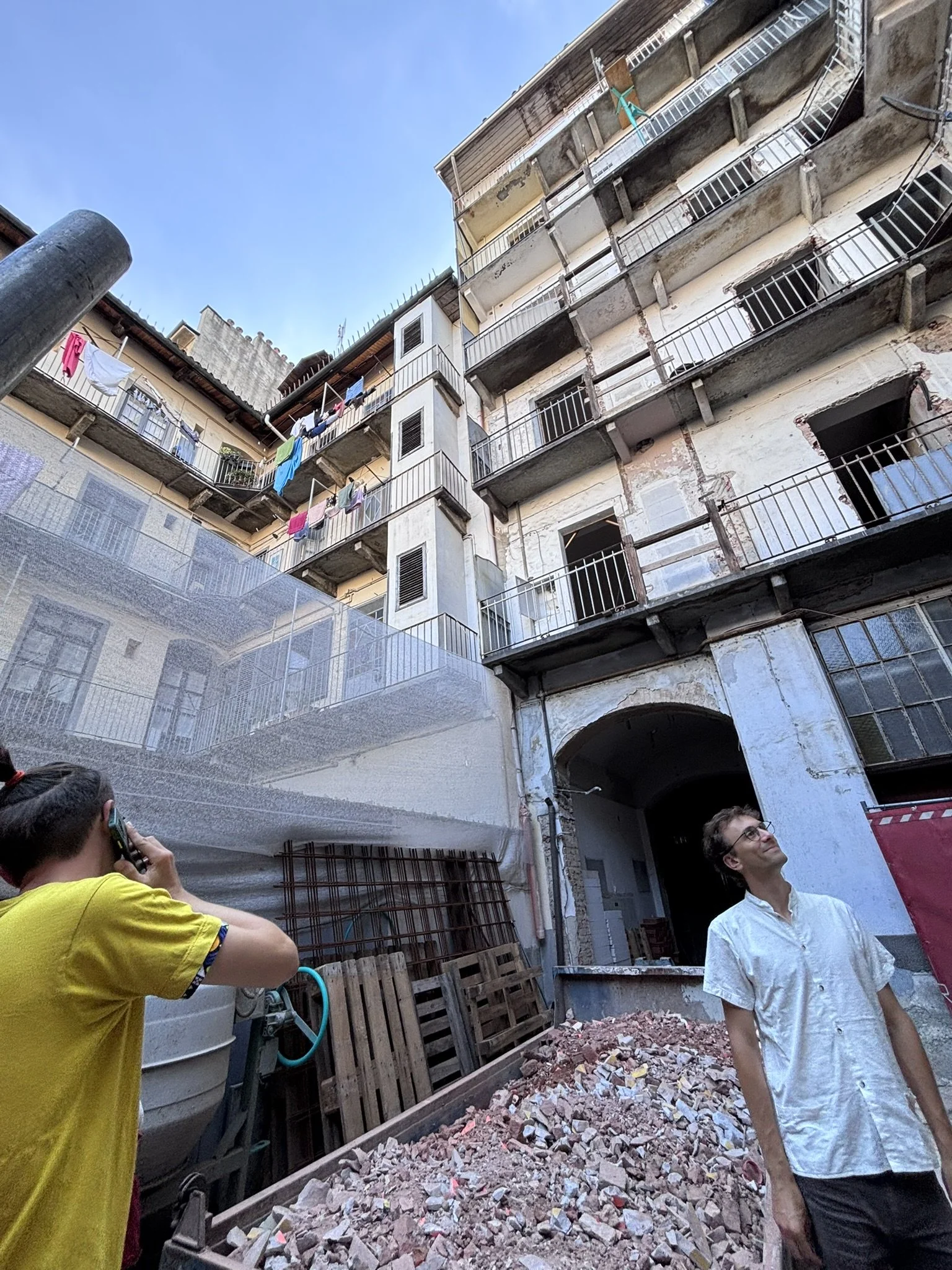
Dali on the site where 16 affordable homes are currently under construction.
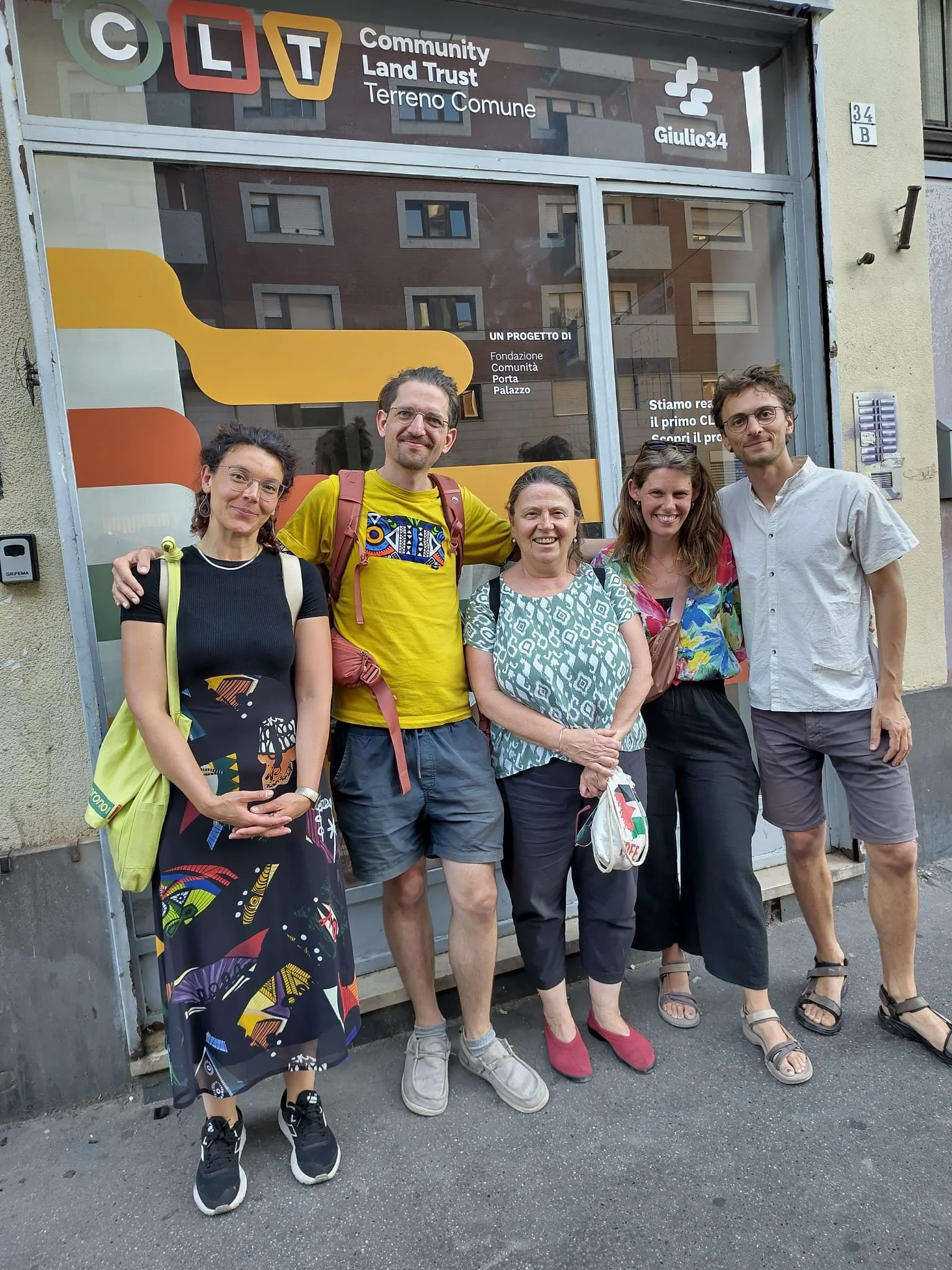
Giulia, Karl (CLT Terreno Comune) and Cecilia (Porta Palazzo Community Foundation), together with Giulia and Dali from the network.
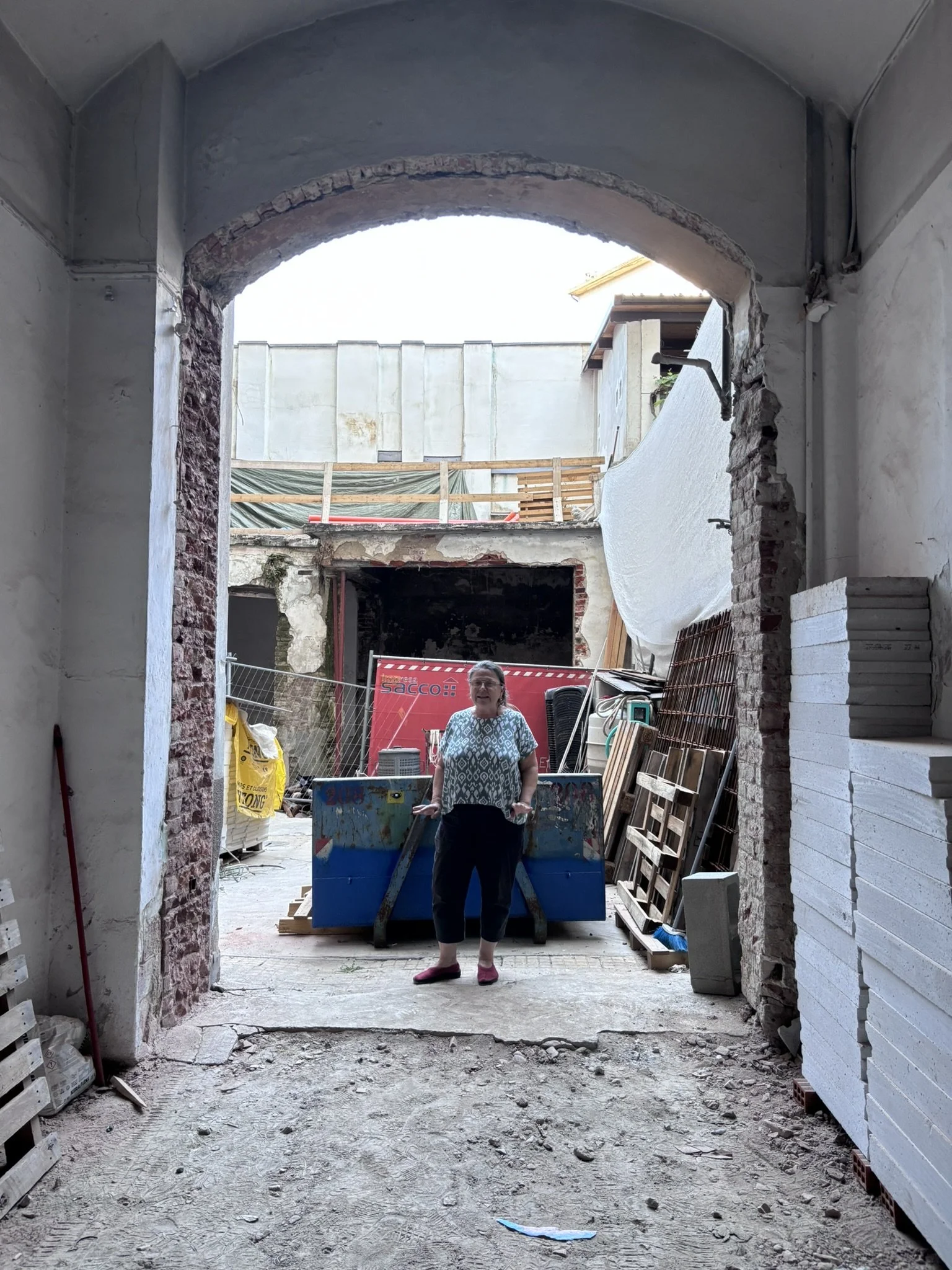
Cecilia from the Porta Palazzo Community Foundation.
Beyond Corso Giulio Cesare 34
The building at Corso Giulio 34 is a powerful proof of concept, making the case for diffusing the Community Land Trust model across Italy.
An Italian network for CLTs, that includes community and academic actors, as well as interested municipalities, is now taking shape, with a second meeting this fall.
Interested in following the project or supporting the development of a wider network of CLTs in Italy?
Get in touch.