
Feasibility Study Launch: CLT-led Renovation in the Self-Built Neighborhood Cova da Moura, Portugal
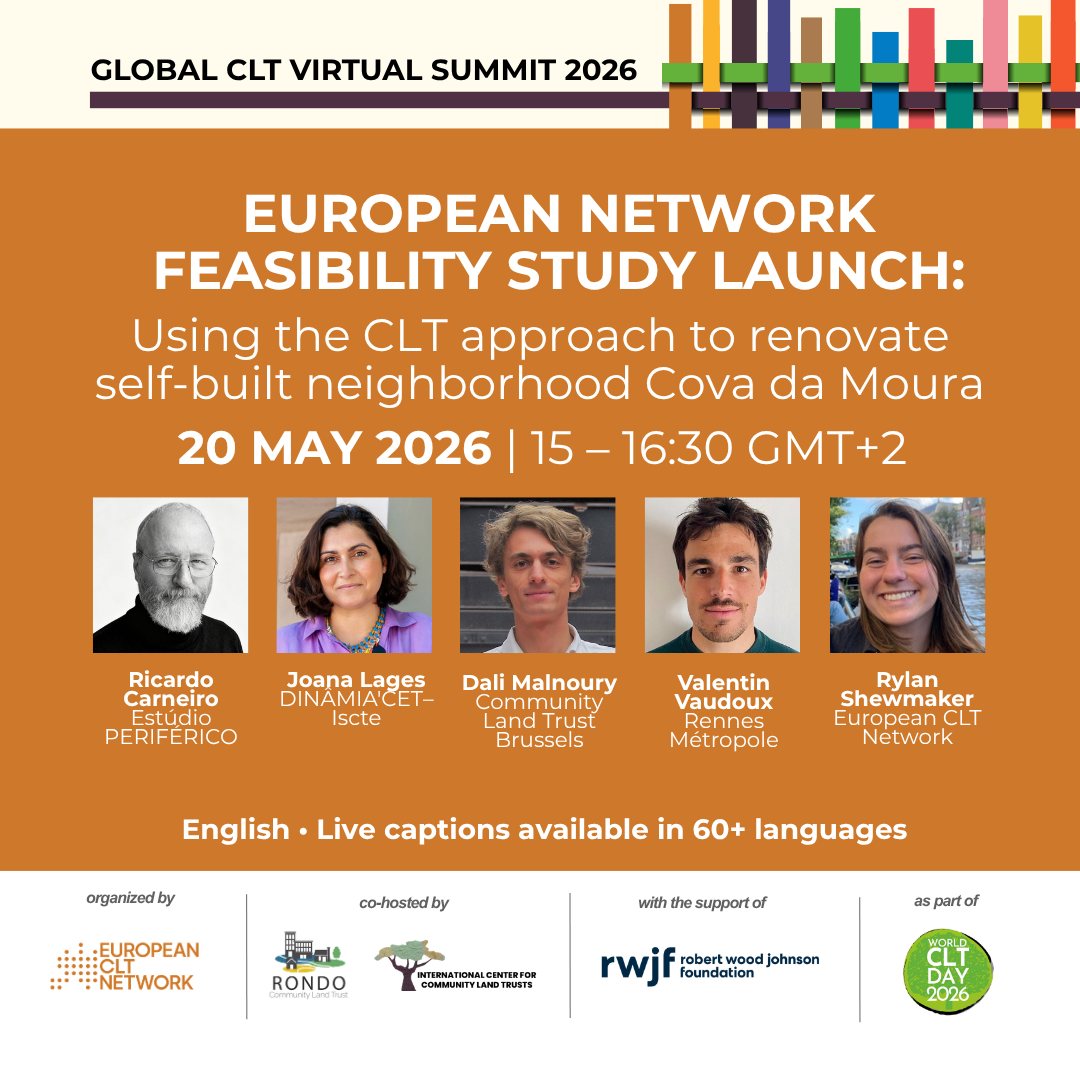
Cova da Moura, a self-built neighborhood on Lisbon’s outskirts with a strong Cape Verdean cultural identity, has long faced limited access to basic urban rights despite its cohesive and active community. A feasibility study proposes Portugal’s first Community Land Trust to secure collective land ownership, improve infrastructure, and protect residents from displacement while preserving affordability.
Cova da Moura is a vibrant, self-built neighborhood located on the outskirts of Lisbon that has been established for over five decades. Home to a community predominantly of Cape Verdean descent, Cova da Moura has a unique cultural identity, high sense of neighborliness, and powerful associative fabric. However, it is also a historically underserved community; because the land is mostly privately owned and was occupied by the residents who built their homes there, the neighborhood has endured a decades-long struggle to secure fundamental urban rights and infrastructure. Despite these challenges, local grassroots organizations and the Neighborhood Commission have continuously championed the community's rights and cultural heritage, shaping Cova da Moura as a powerful place of resistance and solidarity.
To break this longstanding urban impasse, a comprehensive feasibility study was initiated to explore the implementation of Portugal’s first Community Land Trust (CLT). Developed through a close collaboration between the Cova da Moura Neighborhood Commission, the University Institute of Lisbon (Iscte), and global experts, the study investigates how collective ownership can secure land tenure and facilitate neighborhood-scale renovation. By thoroughly examining the legal, financial, urban planning, and participatory dimensions of the CLT model, this research provides a practical framework to empower the community, ensure permanent housing affordability, and prevent displacement or "renoviction" during the urban regeneration process.
Join us on 20 May to discover:
The Cova da Moura Feasibility Study: Deep dives into the legal, financial, participation, and urban planning focus areas of the Lisbon-based project.
The European Renovation Wave: A dedicated panel discussion connecting local efforts to pan-European goals, featuring context from the Upcycling Trust project and comparative examples from Rennes.
Avoiding “Reno-viction”: Strategies for using CLTs as a feasible model to provide permanent affordability, secure housing, and social impact during urban renovations.
Speakers
Ricardo Carneiro, Estúdio Periférico, Architect and Researcher
Joana Pestana Lages, DINÂMIA’CET–Iscte – Centre for Socioeconomic and Territorial Studies, Architect and Researcher
Dali Malnoury, Community Land Trust Brussels, Advocacy & Project Officer
Valentin Vaudoux, Rennes Métropole, Upcycling Trust Project Manager