
Insights from the State of the Sector Report Launch
On 27 May, 2026, The European Community Land Trust Network and The Good Economy hosted the online launch of Community Land Trusts in Europe: State of the Sector Report. We were delighted that nearly 200 registered for the event, with over 100 attending in person.
Many thanks to all those that made this webinar possible.
The key insights from the event are captured below.
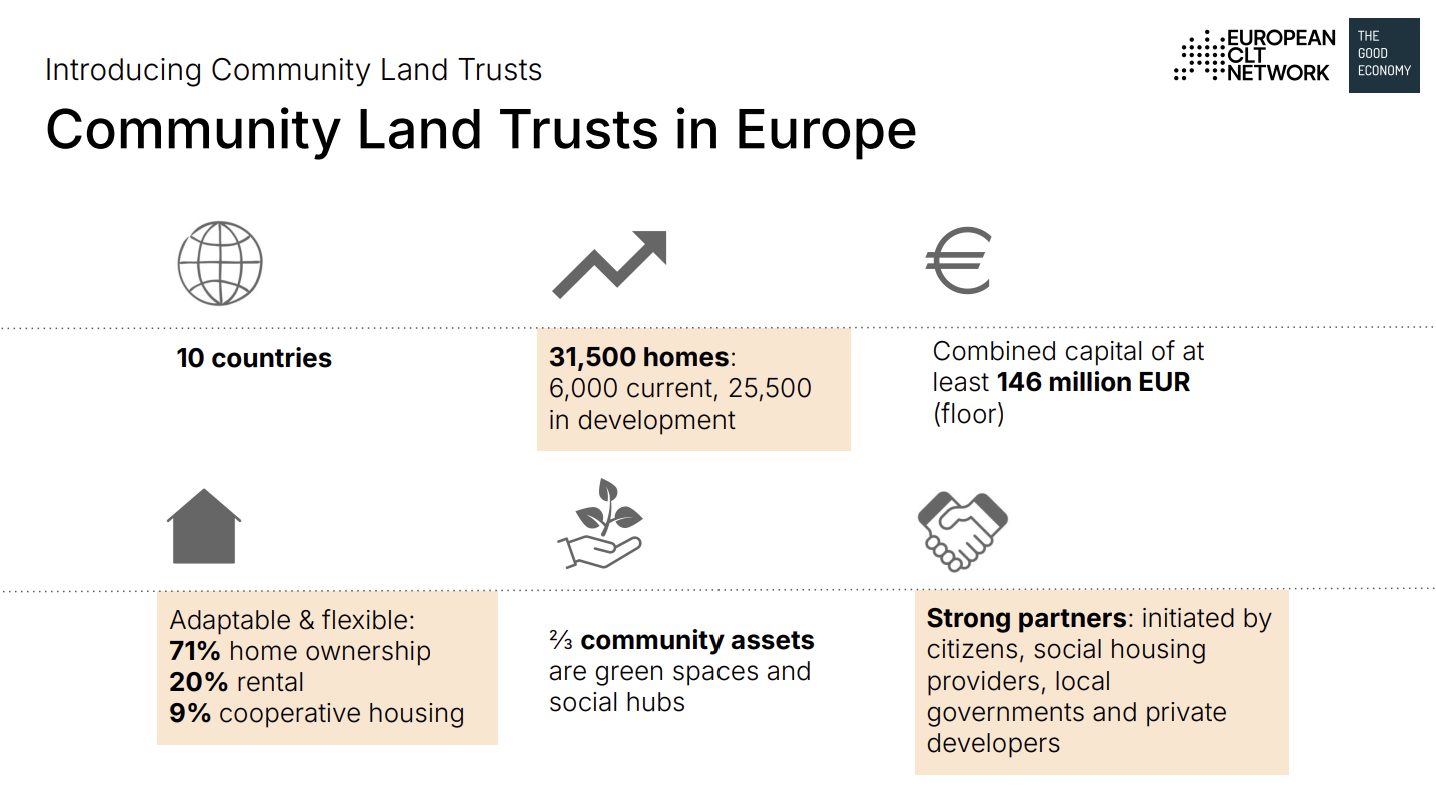
Since our Network launched in 2023, we have moved from a loose collection of CLT projects to a Network representing CLTs across 10 European countries.
Four Main Impact Routes
Keti Tskitishvili, Director and Coordinator of the European CLT Network underlined CLT’s deep roots in social and housing justice: “When land returns to community stewardship, so does power.”
Sarah Forster, CEO at The Good Economy highlighted the four main routes through which CLTs deliver impact:
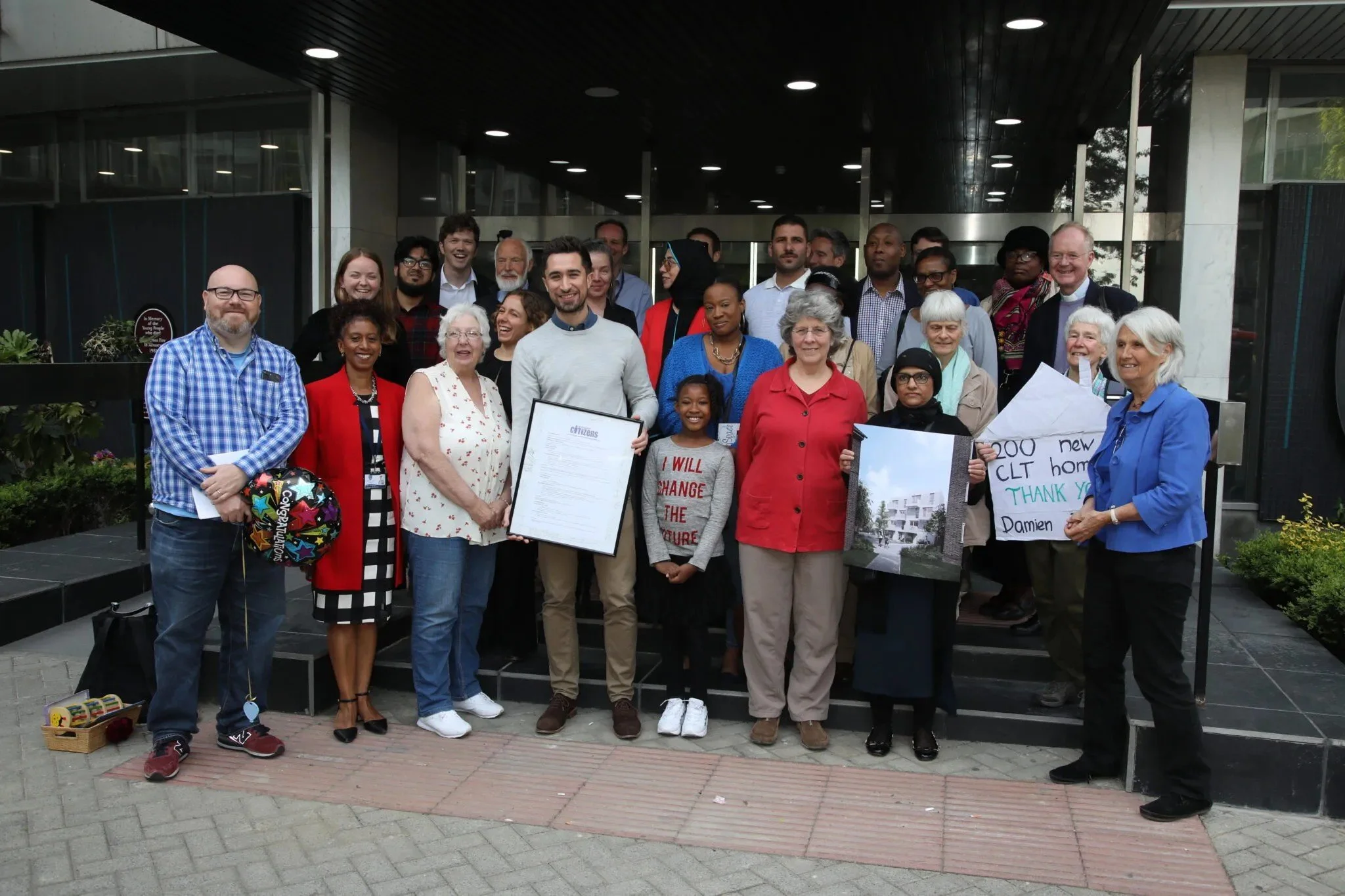
Campaigners for Citizens House, London ©London CLT
1 Long-term affordability
CLTs address the housing crisis and combat displacement by keeping homes permanently affordable, out of the speculative market.
78%
sets rents in line with national social housing regulations or link prices to local incomes
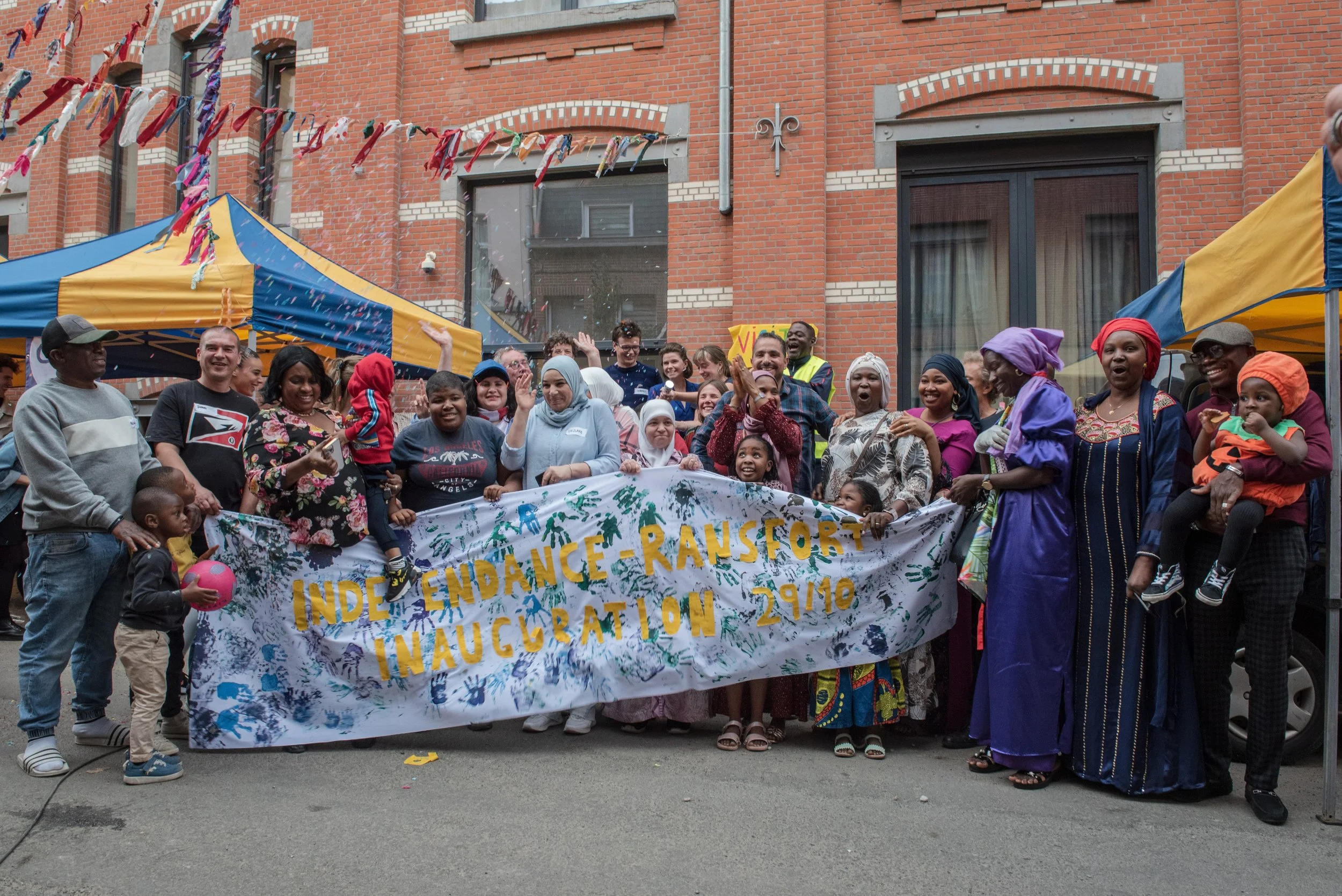
The Indépendance CLT in Brussels. ©Vincent de Lannoy
2 Inclusion and empowerment
CLTs improve well-being and belonging by giving residents a direct, long-lasting role in decision-making and stewardship.
78
different nationalities, Community Land Trust Brussels
95%
residents are highly satisfied with the physical quality of their homes, with clear links to mental and physical well-being.

The first community-owned Passivhaus-certified homes in Scotland.
©Tom Manley Photography
3 Community Wealth & Cohesion
CLTs deliver value beyond homes by delivering community assets and contributing to creating resilient neighbourhoods.
324
community projects, CLT Brussels
£1 invested → £3.10
social value generated, UK community-led housing.
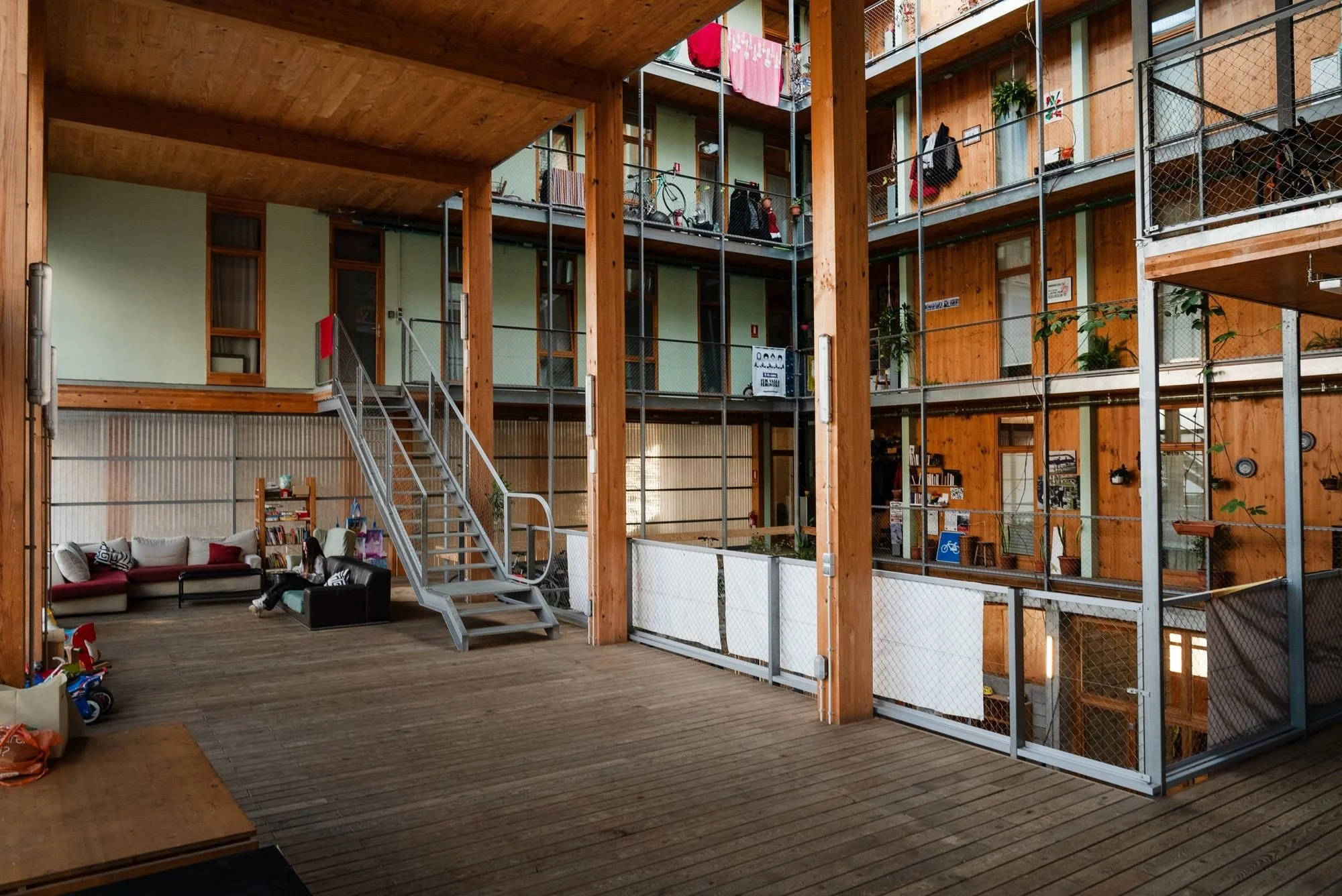
La Borda, Barcelona. ©Lucas Amillano
4 Climate Change & Circularity
CLTs incentivise sustainability by giving residents a long-term stake, and through the renovation and reuse of buildings, energy-efficient design and renewables
61
different methods of circularity deployed by CLTs in their design and use.
Energy label A
all homes in La Borda, Barcelona
“We’ve always believed that community land trusts are part of the solution. They have unique aspects.” -Sarah Forster, CEO, The Good Economy
In addition to offering many of the same benefits as mainstream affordable housing initiatives, CLTs deliver benefits that make the model stand out:
Rooted in local needs
Deliver permanent affordability
Manage wider community assets beyond housing for the long-term
Empowerment is embedded into the way they work:
“For CLTs, empowerment isn’t an outcome. It is actually built into how they operate. That makes them stand out.” -Sarah Forster, CEO, The Good Economy
The Policy Foundations
France’s Organisme de Foncier Solidaire (OFS) model systematically combines finance with a strong, enabling policy environment. These measures also build institutional confidence, reassuring homebuyers and investors alike, that the model offers a credible partner in the national housing system.
Beyond France, we see that regional and municipal authorities deliver powerful enabling policies:
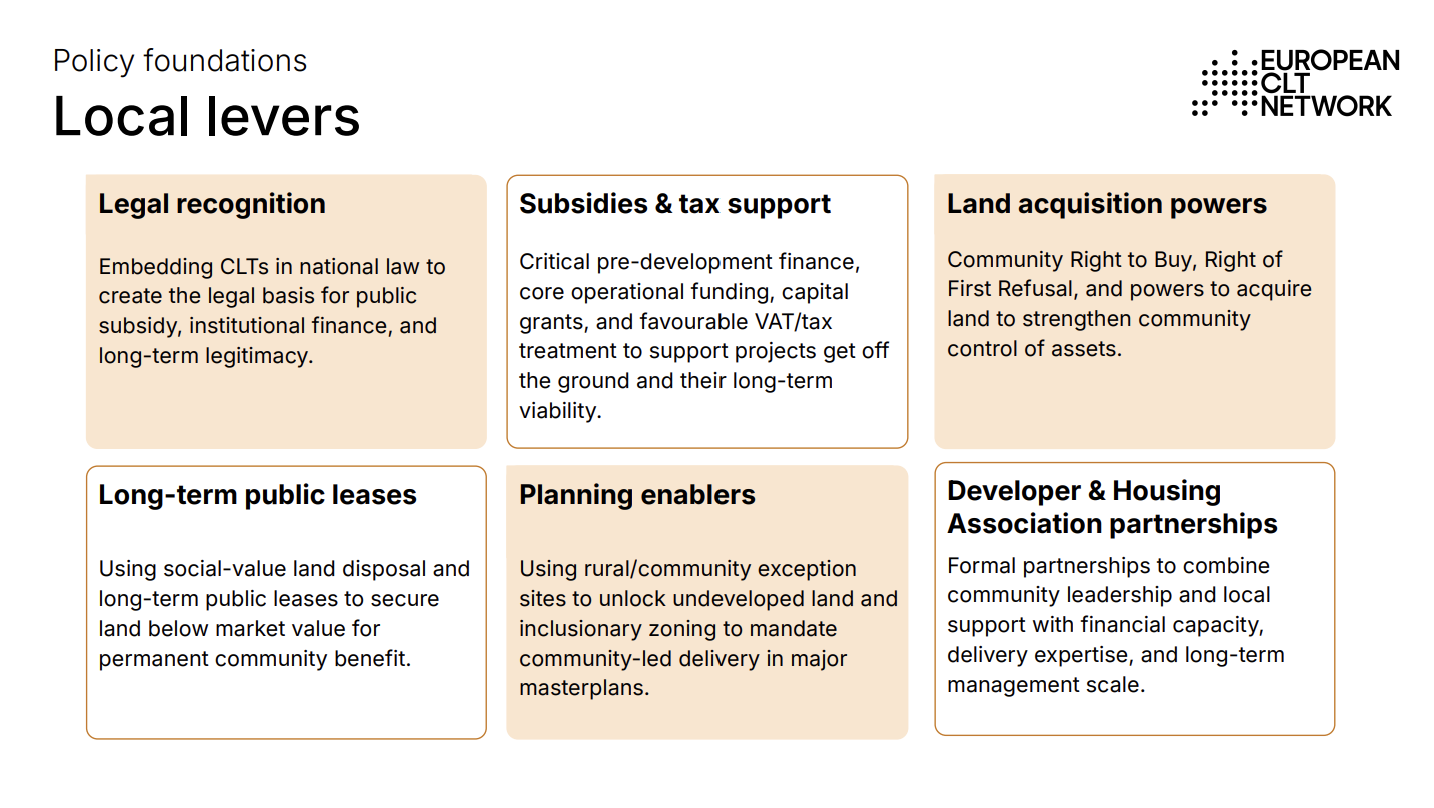
In Conversation with the EU Affordable Housing Task Force
EU-level funding has been catalytic in supporting pilots and but there is significant room to grow this and fully embed CLTs in EU frameworks. With the EU’s first-ever dedicated Housing Commissioner now appointed, the time for that is now.
Matthew Baldwin, Deputy Director-General of DG Energy and Head of the Housing Task Force at the European Commission underlined that the component of land is often overlooked in the current “affordability squeeze”:
“The buildings are the rotting, depreciating assets on top of the valuable commodity, which is land. What you're saying is that communities need better access to and agency over that land.”
Hard-pressed local authorities increasingly need and are turning to these tools:
“Hard-pressed local authorities need these tools and are increasingly using them. Your role is incredibly important on this.”
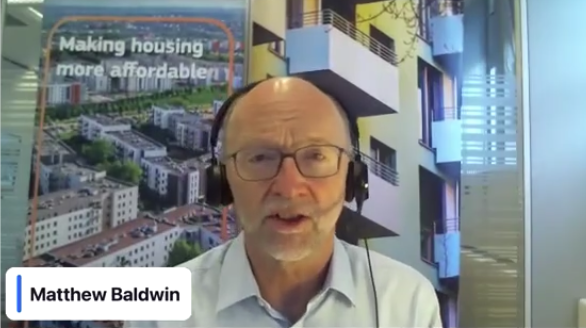
Baldwin welcomed the European Alliance for Collaborative Housing and the role it can play in advancing these solutions. He also encouraged our continued engagement on housing, land, and finance issues at EU level.
“I am really glad that you mentioned the European Alliance for Collaborative Housing. Your role is incredibly important because Brussels requires people with important things to say to speak loudly to all the different institutions. For us you’re a vital part of the solution.”
— Matthew Baldwin, Head of EU Affordable Housing Task Force
Market Transformation
In England and Wales, 76% of completed CLT schemes are delivered in partnership with housing associations or developers - combining the strengths of each partner at different stages of delivery.
The partnership benefits both sides: CLTs gain scale and expertise, while developers gain stronger community backing.
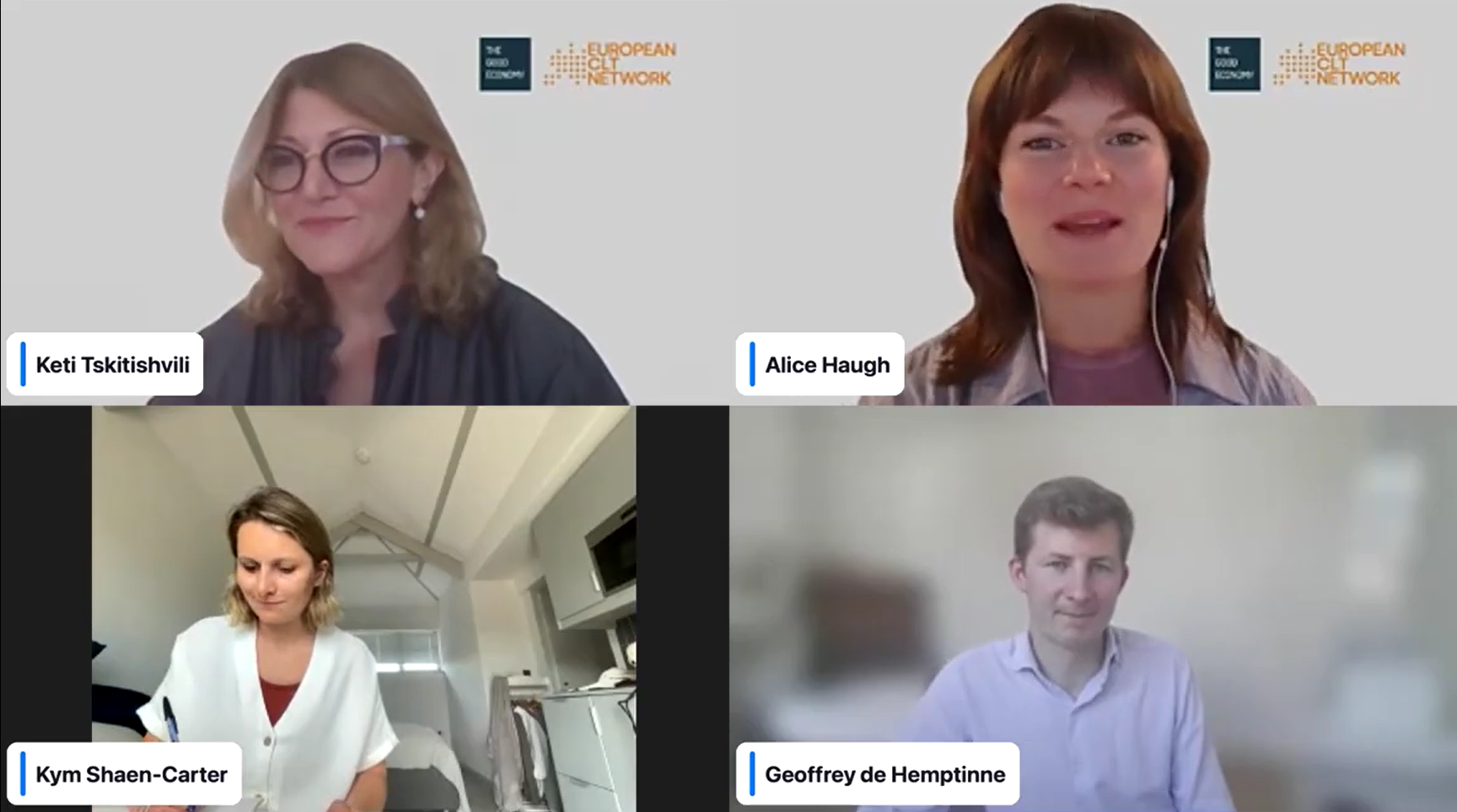
Alice Haugh, Senior Programme Manager at Laudes Foundation, Kym Shaen-Carter a Development Director at igloo in UK and Geoffrey de Hemptinne, Real Estate project developer at Revive in Belgium joined the conversation in a panel format.
The panel highlighted the value of moving beyond consultation towards genuine partnership:
“Communities shouldn't be consultees in the development process. They should be partners”
- Kym Shaen-Carter, igloo
Panelists pointed to the practical benefits of partnering with a CLT.
“In some projects, it (partnering with CLTs) can help to de-risk by selling a part of the project directly in a block sale to a local CLT. It allows you to de-risk a significant part of the development without jeopardizing the rest of the project. Sometimes it also allows us to achieve the pre-sales rates which are required to secure bank financing.”
- Geoffrey de Hemptinne, Revive
The speakers made a strong case that trust, collaboration and community agency are not barriers to development, but key enablers of scale and long-term impact:
“We have to change the narrative that communities are slowing projects down. That's just not true.”— Kym Shaen-Carter, Development Director, igloo Regeneration
Become an Industry Champion! - Join a growing network of advocates: developers, housing associations and municipalities advancing community land trust partnerships.
England & Wales launch event in London: 9 July, 2026.
Email gemma@communitylandtrusts.org.uk to attend.The Netherlands programme launch in October 2026.
Email thieme@andthepeople.org to get involved.