
Bristol CLT's open-source approach to low-carbon housing
Aga’s visit to WeCanMake's factory where an art residency evolved into housing innovation: bio-based materials replacing concrete, local timber on CNC machines, and community members learning to build their own homes.
About the author: Aga Biedalak is a Board Trustee at the European CLT Network, an advocate for community-led housing and sustainability expert for the built environment.
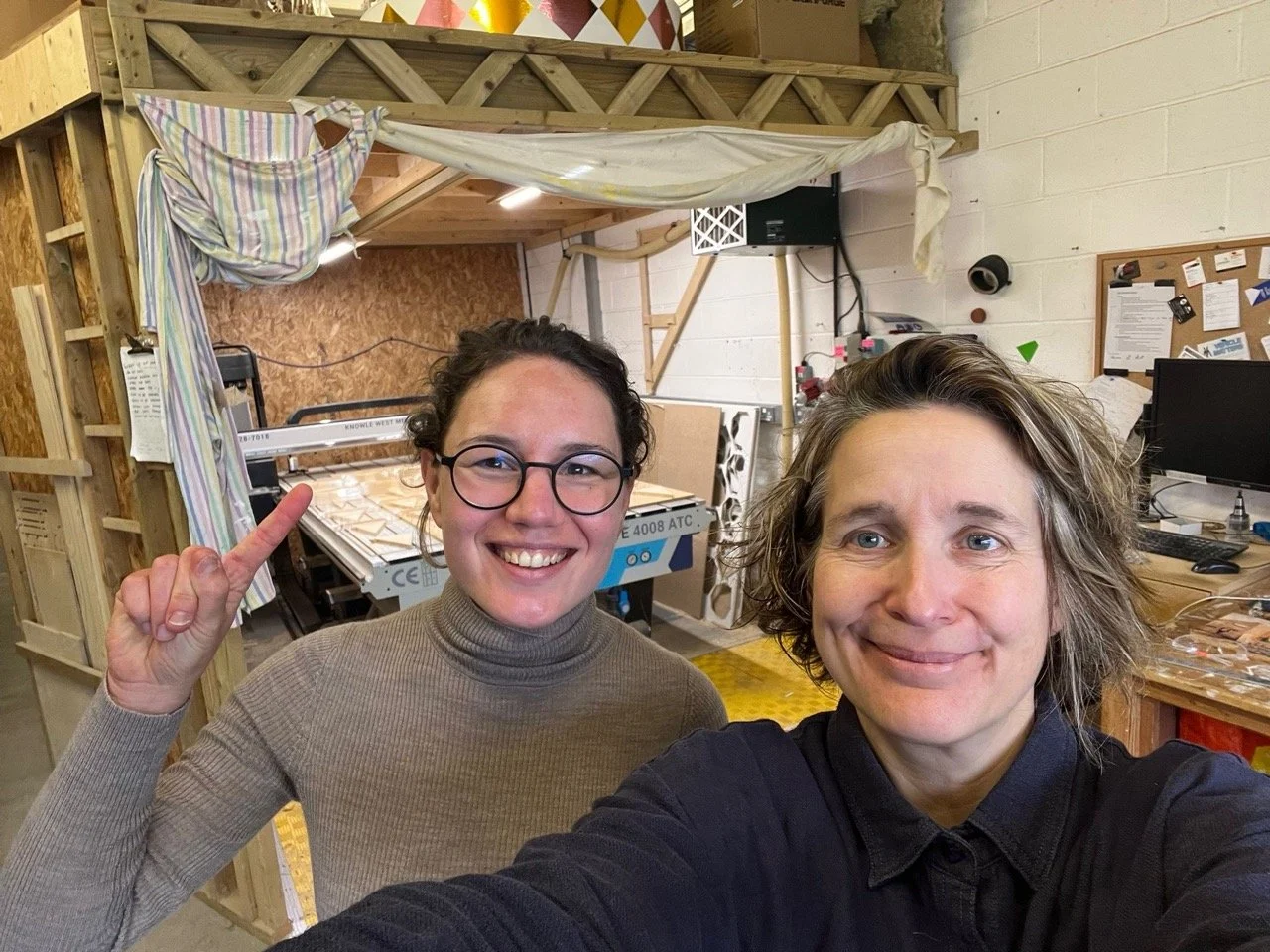
Melissa Mean (right) in the WeCanMake factory, behind the CNC machine for cutting modules for bio-based housing
From rural Peak District to urban Bristol - my second CLT visit revealed a very different approach to the same challenge: creating permanently affordable housing.
CLT projects consistently deliver what mainstream housing developers rarely attempt. Low-carbon construction methods. Energy-efficient design. Community participation from day one. WeCanMake CLT in Bristol demonstrates how technical innovation and open-source collaboration can transform these principles into scalable, replicable systems.
A colorful revolution, in a grey business complex
Melissa Mean is the director of WeCanMake CLT, a pioneering organisation from Bristol. WeCanMake is delivering very impressive grassroots, community-led, climate-conscious work. It was therefore surprising to discover the small size of the organization and that it works only locally. Melissa has been the brain behind WeCanMake since 2017, when it began as an artist residency under Knowle West Media Centre. The initiative started as an art residency, and grew to become a widely recognised innovation and implementation organisation, admired for its work amongst bio-based, sustainable and affordable housing circles.
I arrived in South Bristol on a misty autumn morning in South Bristol while I discovered the colourful factory within a grey industrial business complex. The warm smell of the space immediately took me back to a wood working workshop.
The Factory space is filled with posters from exhibitions, 1:1 models of bio-based renovation and thermomodernisation concepts, and tables that serve as a bio-based materials library. It radiates creative energy and a hands-on approach, where architectural plans on the walls hang next to hand drawn portraits of community members, from their natural construction training.
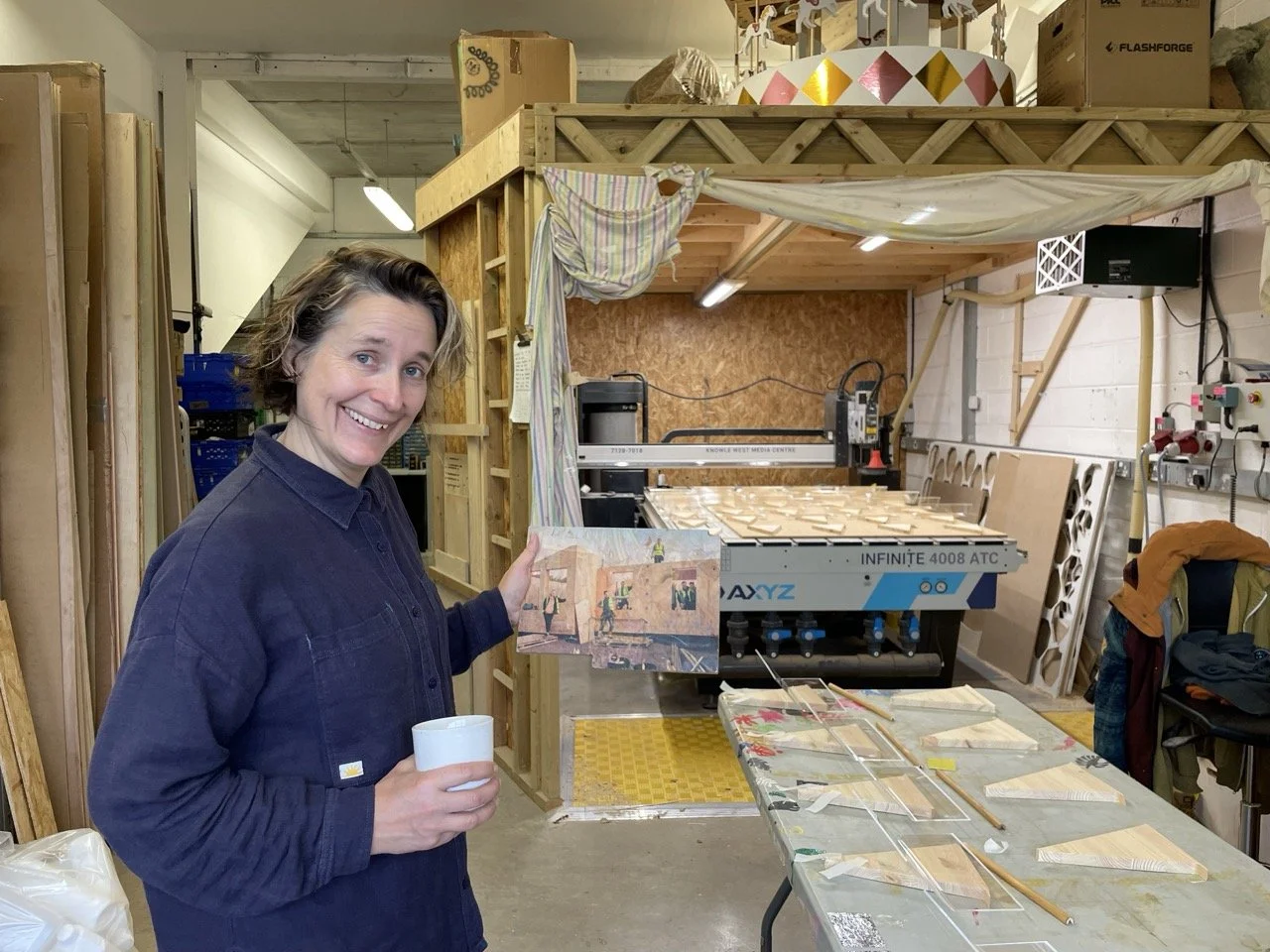
Melissa Mean in the WeCanMake factory, behind the CNC machine for cutting modules for bio-based housing
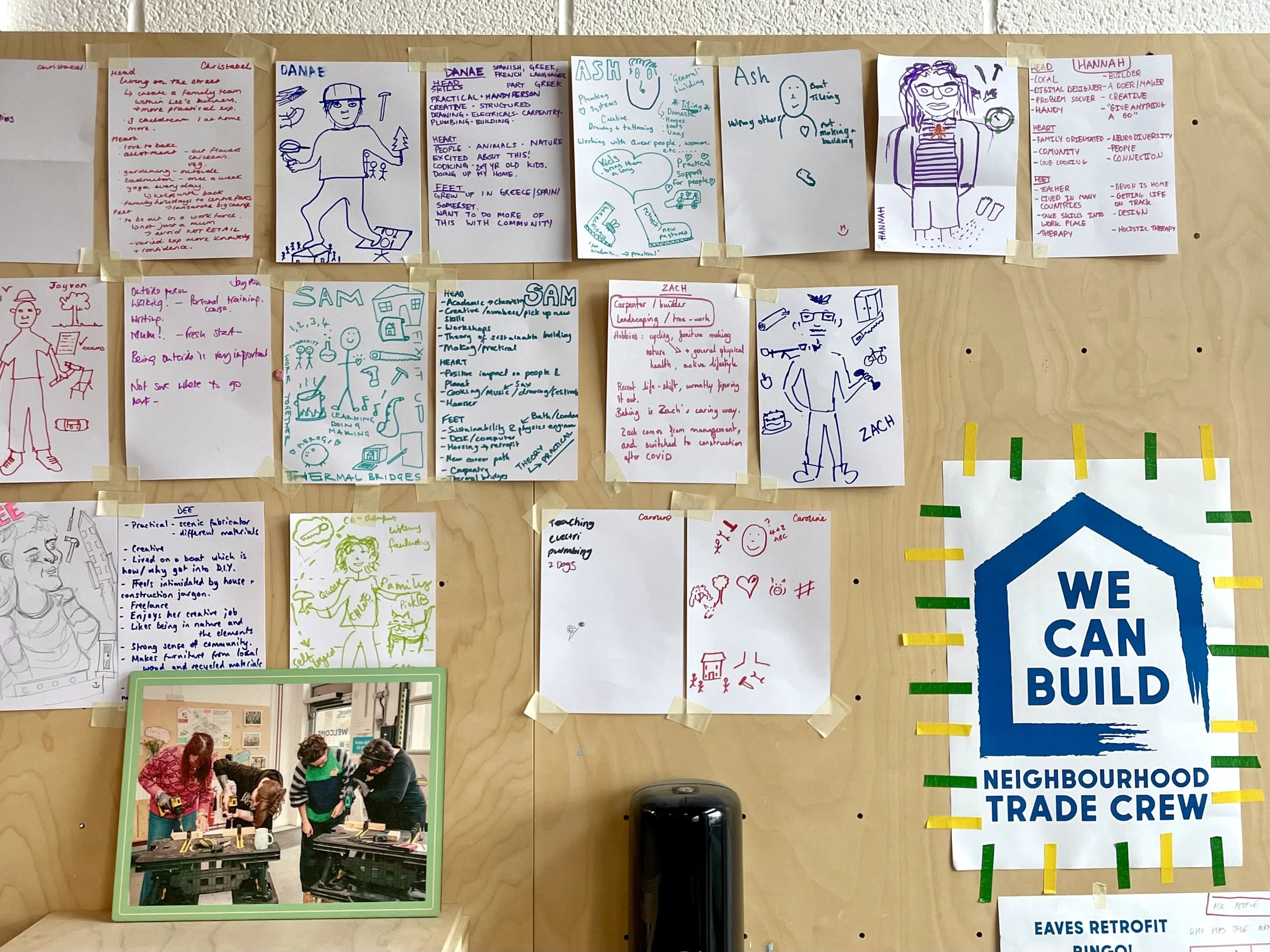
Sketches by community members, from their natural construction training
853 forgotten plots that could house 5620 homes
Looking around the workshop, my attention is drawn to a colorful map of South Bristol, with plenty of small lots of land scattered throughout the city. Due to the low density of the city and the lack of affordable housing in neighbourhoods where it is most needed, WeCanMake developed a mapping of vacant sites and microsites in South Bristol.
They identified “leftover” lots of land that could be used to build infill housing units. All these lots were found to amount to a potential 853 sites for 5620 homes. Most of these spaces are underutilised sites, backland or leftover street space like former garage sites. This local mapping has also been translated into a bigger ambition, describing directions on how affordable housing could be developed within planetary boundaries across Great Britain.
The first CLT homes built after years of research and community building, have been constructed by the future residents themselves. The WeCanMake team used this opportunity to train local people in modern, low-carbon construction methods. Thevideo linked shows the story of how future WeCanMake residents learnt how to build, fit out and decorate their own homes before moving in. One of many examples where WeCanMake starts with people, to make sure community wealth will stay in the neighbourhood in the form of jobs, skills and local infrastructure.

Resident Toni (left) works alongside the build crew during the construction of her home. Photo by Ibi Feher, courtesy of WeCanMake.
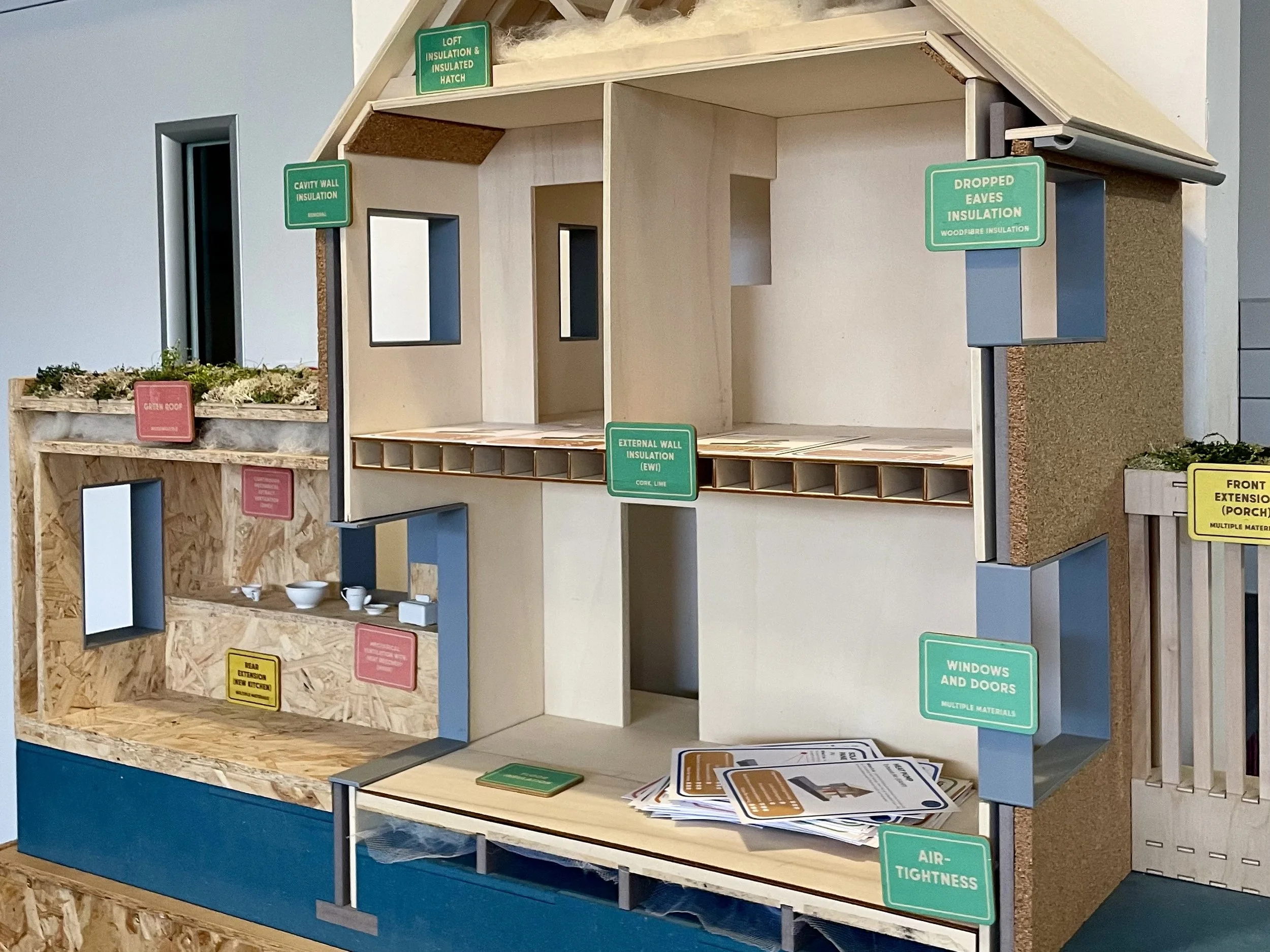
Model of building retrofit with natural materials as part of Retrofit Reimagined project.
Building a house in no time, while staying within planetary boundaries
We walk through the workshop: workspaces, 3D printers, and a separate room housing the CNC machine where housing modules are cut. Melissa enthusiastically shares that it takes only a few weeks to prepare modules for a two bedroom house on this single CNC machine. A small apartment block that is currently in development shall take approximately seven months. A pace that is unthinkable for classic construction methods, and yet it is both cheaper and has a much lower carbon footprint than regular construction.
“We have bio-based home designs that are open source and available for CLTs for download. Designs that are ready to be turned into affordable housing units in just a few weeks, using any CNC machine.” - Melissa Mean
Just a few weeks before my visit, WeCanMake celebrated being granted planning permission for a new infill housing project for 6 households and a community space. The Rodford Dreams project brings together the mapping exercise that helped identify potential plot, and ambitious open source MultiMax system for low-rise timber housing.
The MultiMax System is a standardised, pre-approved timber ‘kit of parts’ for low-rise residential buildings. Designed to demonstrate how locally grown timber and biomaterials can replace high-carbon materials like concrete and steel, MultiMax offers an affordable, low carbon solution for new housing.
Having years of experience in sustainable architecture and urban design, I leave Bristol deeply inspired by WeCanMake holistic, integral and hands on approach to innovation. Back at home I found beautifully designed publications in which WeCanMake shares their work via their website, for others to get inspired. A piece of work that breathes hope into both the construction industry and affordable housing future.
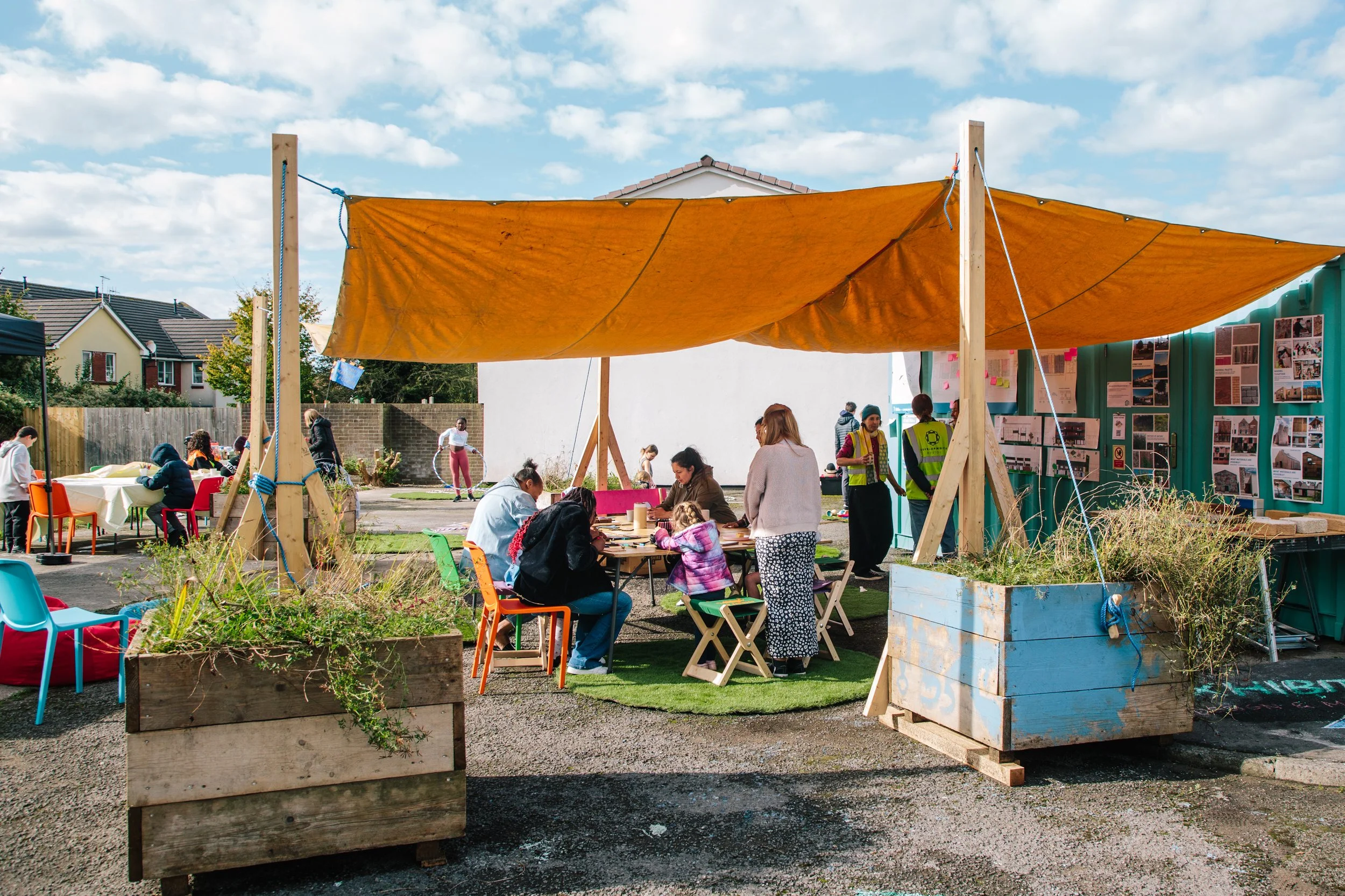
Placemaking activities with the local community at the Rodford Dreams project site. Photo by Ibolya Feher, courtesy of WeCanMake.
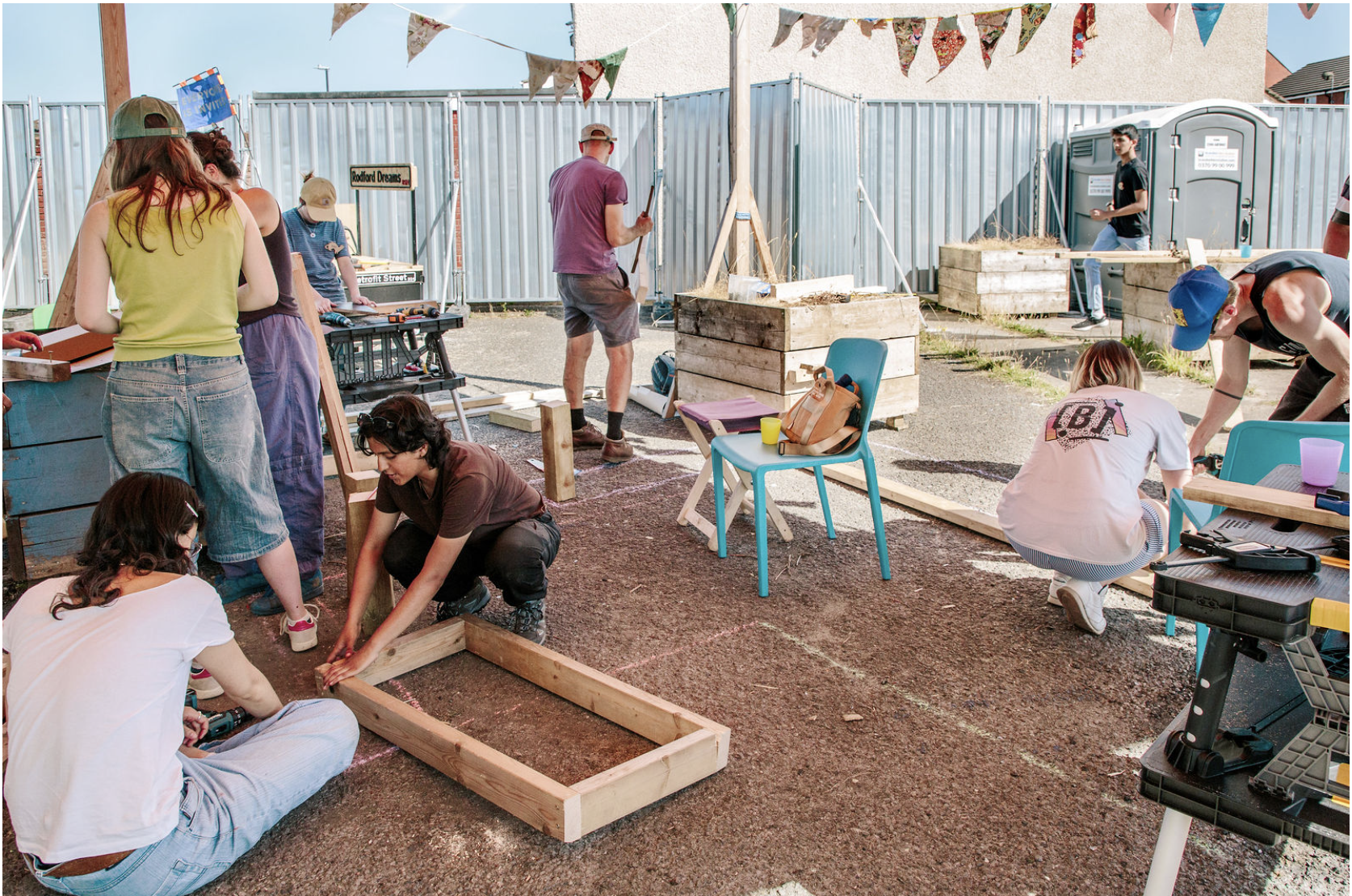
Placemaking activities with the local community at the Rodford Dreams project site. Photo by Ibolya Feher, courtesy of WeCanMake.
Small organizations, systemic change
WeCanMake combines action research, community building, prototyping, and design to shift how affordable housing is delivered.
Both Andy’s work in Bradwell (see previous travel story) and Melissa’s initiatives start with people. Small-scale, local organizations can meet local communities, understand needs, and provide solutions that large-scale developers cannot match. They deliver not only affordable housing, but innovative sustainable solutions communities can be proud of.
WeCanMake proves that combining community-led approaches with open-source innovation, creates systemic change extending far beyond a single project.
Big thanks to Tom Chance, CEO of CLT Network England & Wales, who provided support in planning the visits.